Hands
Handsets on vintage Tudor Submariners follow a similar path to the watches themselves - starting closely aligned with Rolex before gradually developing their own identity. Early examples use traditional Mercedes-style hands, but by the late ’60s Tudor introduced the now-iconic snowflake handset, prioritizing legibility and function.
It’s a subtle shift on paper, but one that ultimately defines the look of vintage Tudor Submariners and marks a clear departure from their Rolex roots. In this section, we’ll break down the use of hands across two periods: Pre-Snowflake (1950s–late ’60s) and the Snowflake era (late ’60s onward).
Pre-Snowflake (1950’s - late ‘60’s)
Early Tudor Submariners stay very close to Rolex in both design and execution.
Mercedes hour hand
Slim pencil-style minute hand
Lollipop seconds hand
Overall thinner, more refined proportions
At this stage, the hands are essentially Rolex style - nothing overly distinctive, and often hard to separate at a glance.
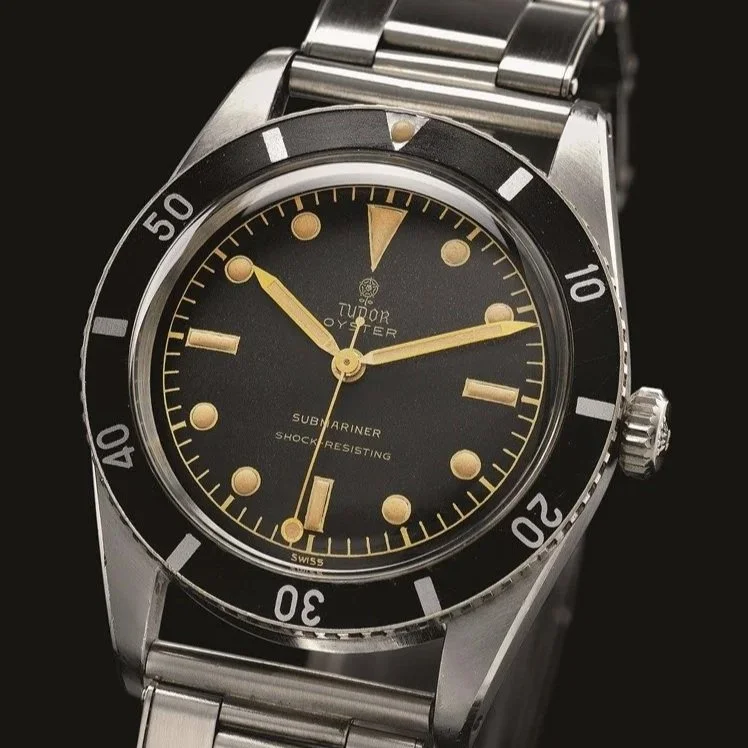
Tudor 7923 with pencil hands
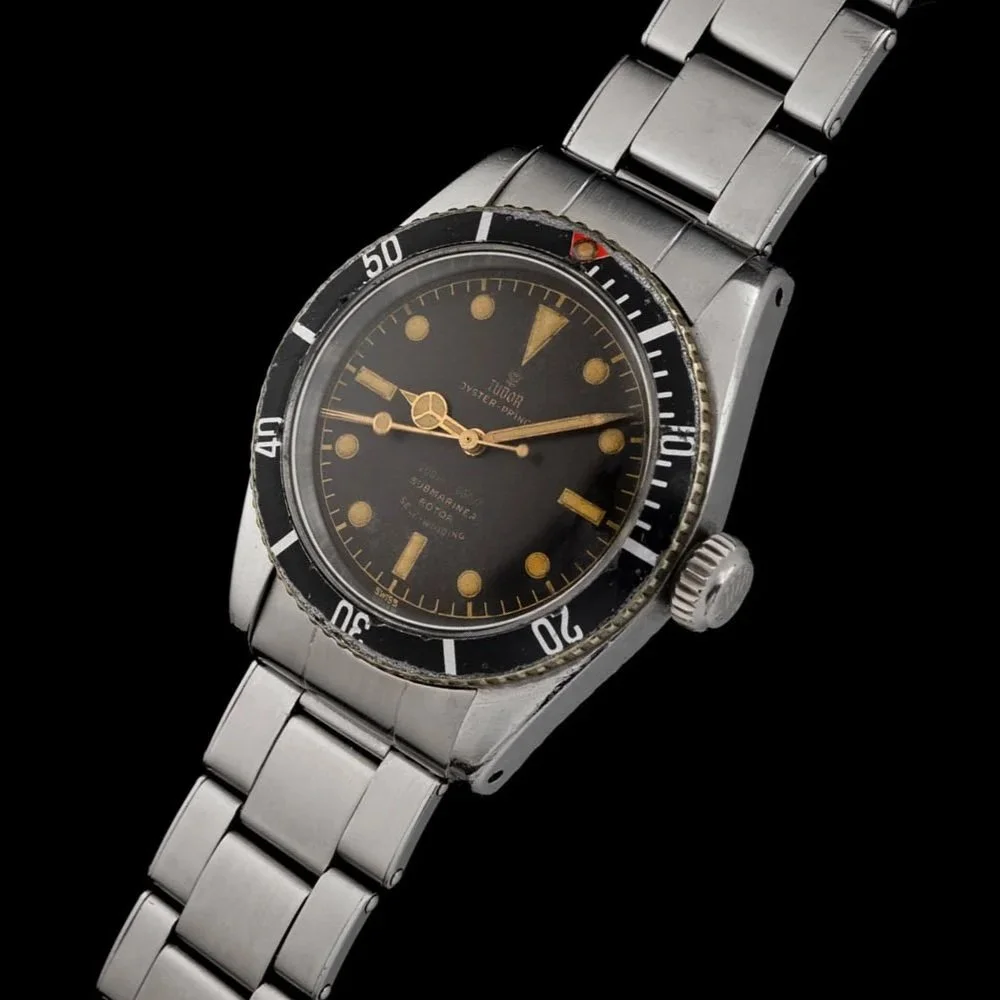
Tudor 7924 w/ traditional mercedes hands
Snowflake Era (late ’60s onward)
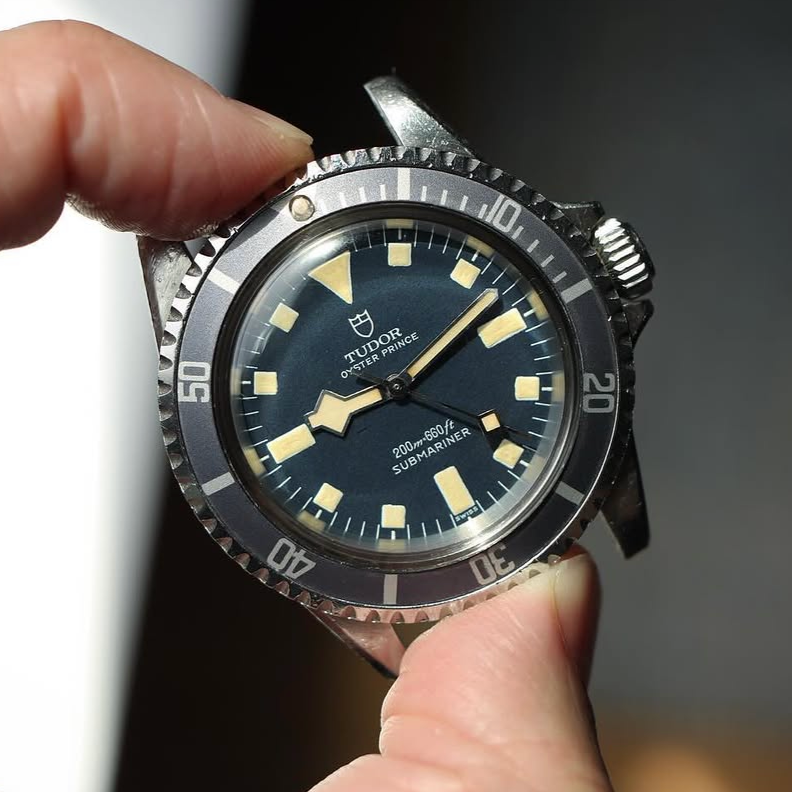
Tudor 7016/0 Snowflake - “Swiss Only”
This is where Tudor defines its own look.
Square “snowflake” hour hand
Broader sword-style minute hand
Larger lume surfaces across all hands
Paired with square lume plots on the dial
The focus shifts clearly toward legibility and function, giving Tudor a more tool-driven aesthetic and marking a real departure from Rolex design. The snowflake handset, introduced in 1968 and influenced by Tudor’s work with the French Navy, where improved underwater legibility was critical, signals a new direction for the brand and helps establish a distinct identity.
It’s arguably the defining feature of Tudor ever since, with much of the modern lineup returning to the same design. While Tudor did revert back to the traditional Mercedes-style handset toward the end of the 94 series and for a period after, the snowflake has ultimately become the signature.